Preparation
We use a simple tasting method where you compare sour, bitter, and flat. The ideal cup falls right in between.
What do you actually taste?
All the flavors in coffee originate from natural acids that form during the growth, fermentation, and roasting of the bean. Think of:
→ Citric acid (fresh, citrus)
→ Malic acid (mild, fruity)
→ Tartaric acid (grape-like, dry)
→ Lactic acid (soft, creamy)
→ Acetic acid (sharp, vinous)
→ Chlorogenic acid (can taste bitter, especially with dark roasts)
These acids together form the flavor profile of your coffee. But how they are expressed depends heavily on the water you use to brew it. Water makes up 99% of your cup and contains minerals like calcium, magnesium, and sodium. These influence the extraction of flavors—just like salt does in a dish.
Step-by-step Coffee Setup
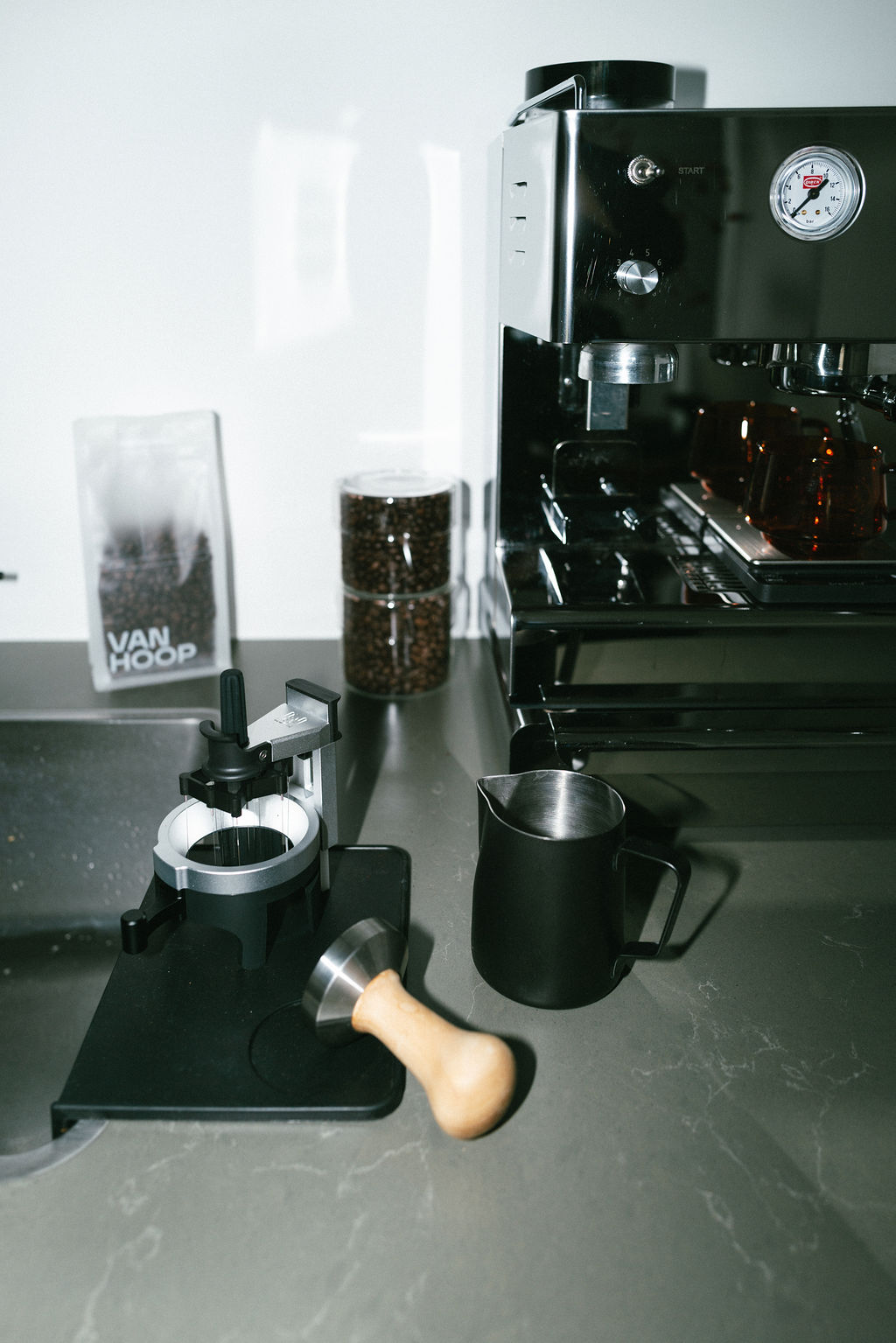
For piston and fully automatic machines
1. Initial setting:
Use 18g of coffee (double espresso) and aim for 36g of coffee in 25-30 seconds. Fully automatic? First, set the grind setting to maximum fineness. You'll find the grind setting button in the bean hopper.
2. Taste
→ Sour? Grind a little finer.
→ Bitter? Grind a little coarser.
→ Bland? Adjust your ratio: higher yield or shorter time.
3. Repeat.
Small adjustments make all the difference. Take 2-3 shots, test, and compare.
4. Check your water
Use filtered or bottled water with a low mineral content (approx. 80-120 ppm).
5. Note down your settings.
That way you know what works — handy when you get new beans later.
6. Customize
Adjust your output or ratio for a stronger or lighter profile.